

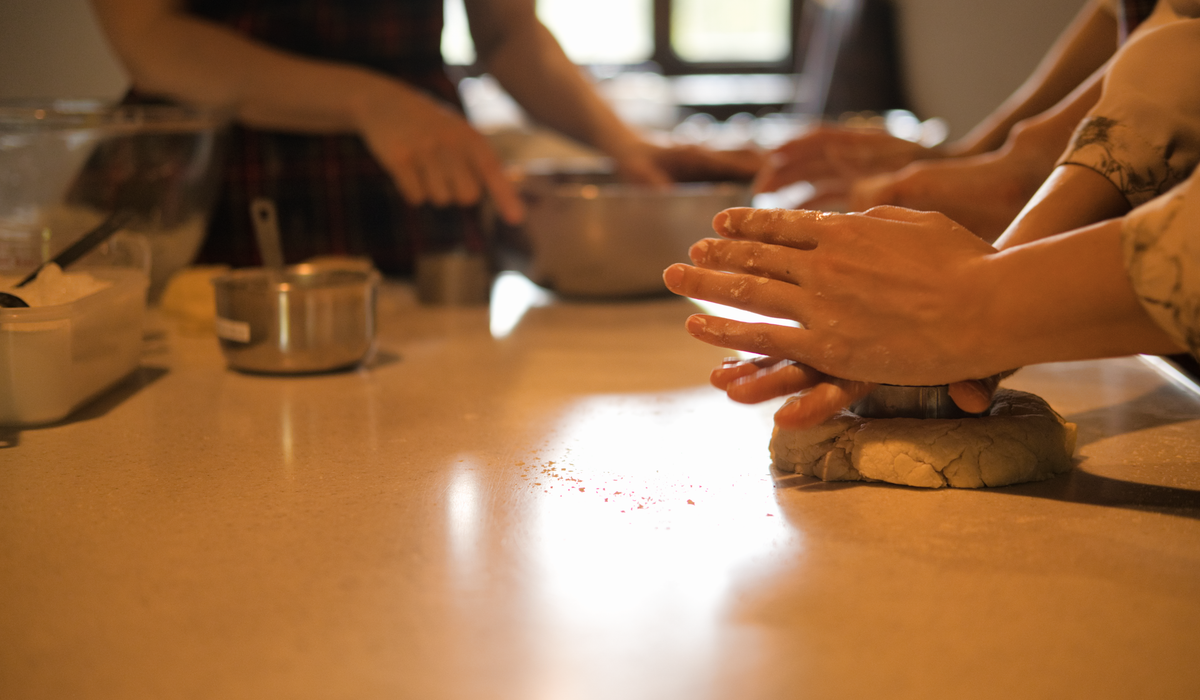
Why British wheat deserves a place on the stall
Walk into any community bake sale and you will usually find the same line-up: a tray of brownies, a lemon drizzle, and a plate of something gluten-free. Bread is rarer, which is a shame, because a well-made British loaf is exactly what people queue for when the table is set up on a village green or under a church hall awning. It also gives you a chance to talk about the grain itself.
For most of the last century, British baking relied on imported strong wheat for volume and home-grown soft wheat for biscuit and cake. Heritage varieties — Red Lammas, Squareheads Master, Maris Wigeon, Chiddinglye — were sidelined because they yielded less and stood taller in the field. What they lack in industrial efficiency they make up for in flavour, and modern population wheats such as YQ and Hen Gymro are now grown by low-input mixed farms that use fewer sprays and keep living roots in the soil over winter. Choosing that flour for a bake sale is a quiet act of support for sustainable arable farming.
The trade-off is gluten strength. Heritage flours are often lower in protein and extensible rather than elastic, so they need gentler handling. An autolyse of 20 to 30 minutes before you add salt, a few folds instead of a long knead, and a cool overnight prove will get far more from them than brute force.
The three bakes that sell themselves
Choose items that survive a car boot, a trestle table and four hours of handling. Three British classics do this better than anything else.
- Baps. Soft, slightly enriched Scottish rolls made with milk, a little butter and around 70g of dough each. Flatten them before the final prove, dust heavily with flour, and bake at 190°C for 12 to 15 minutes. They squash without crumbling, which makes them ideal for people carrying shopping. Price them singly and in fours.
- Bloomers. A long, diagonally slashed loaf of roughly 800g. Use strong white flour with 15 to 20 per cent stoneground wholemeal for flavour. Bake at 230°C with steam for the first ten minutes, then drop to 210°C for a further 25 to 30 minutes. Sell whole and in halves — halves are the surprise bestseller.
- Wholemeal buns. Enriched with milk, butter and a spoon of honey, studded with seeds or dried fruit, scaled at 90g and baked at 190°C for about 18 minutes. They keep for two days, freeze well, and can be made vegan with oat milk and rapeseed oil without anyone noticing.
Choosing and blending your flour
Buy stoneground wholemeal as fresh as you can and use it within six to eight weeks. Stone milling leaves the germ in the flour, and the oils in the germ go stale quickly. Store it somewhere cool and dark, never above a warm oven, and smell it before you bake — it should be sweet and nutty, not sharp.
For a bake sale, blend deliberately. A 60:40 mix of strong white bread flour and heritage wholemeal gives you lift, crumb and flavour in one go. If you are working entirely with a low-protein heritage variety, expect a tighter crumb and a flatter loaf; that is a feature, not a fault. Sourdough starters made with population wheat tend to be lively and forgiving, but they need a warmer, longer bulk than a commercial yeast dough. If you use dried yeast, remember that most British recipes assume 7g sachets, while fresh yeast needs roughly twice the weight and a little more warmth.
Batch timings for a stress-free bake
Two days out, mix your preferment or refresh your starter. One day out, mix the doughs in the evening, give them a short bulk at room temperature, then shape and put them in the fridge at 4 to 6°C for 12 to 16 hours. This overnight cold prove does three useful things: it develops flavour, it firms the dough so it holds its shape, and it lets you bake in daylight rather than at midnight.
On bake day, order your oven work by how the bread holds up. Bloomers first, straight from the fridge into a hot oven. Buns next, proved at room temperature while the loaves bake. Baps last, because they are best eaten on the day and lose their softness fastest. Cool everything completely on wire racks — bagging warm bread traps steam and turns a crisp crust leathery within an hour. Work in batches of twelve rather than trying to fill the oven to the door.
Packaging, pricing and labelling
Keep it simple and readable. Paper bags with a greaseproof patch, or greaseproof and a paper band, look honest and cost pennies. Every label should carry the bake date, the ingredients, and the allergens in bold: wheat (gluten), milk, egg if used, and a note that the kitchen handles nuts and sesame. Add "best eaten within two days, freezes well" and you will sell more than you expect, because people buy bread they know they can save.
Price to cover ingredients, packaging and your time, then add a sensible margin. In most parts of the UK that lands around £1.10 for a bap, £1.30 for a bun, £2.40 for half a bloomer and £4.50 for a whole one. Bring a change float of at least £30 in coins and small notes, and a card reader if your group has one.
- Label vegan and vegetarian items clearly — they sell out first.
- Offer a bundle: a bloomer half plus four baps for £5.
- Print a single allergen sheet to display instead of writing on every bag.
Making the most of the day itself
Presentation does a lot of the work. Keep loaves cut-side down on a board with a clean cloth over them, and keep one bloomer sliced for samples. A small sign naming the wheat — "baked with stoneground heritage wholemeal, grown 30 miles from here" — starts conversations and justifies your price.
Take pre-orders for the next market, note what sells out by eleven o'clock, and keep a simple tally of quantities. Your second bake sale will be twice as easy, and you will have done something genuinely useful: put real British bread, made from grain grown well, back into the hands of your neighbours.




John Doe
14 January, 2022Having no content in post should have adverse..
Chauffina Carr
10 April, 2022We use these tests all time! Killer stuff!
Jim Séchen
16 July, 2022Thanks for all the comments, everyone!